

Same rights, same obligations
For me, sport isn’t just about competition – it’s also a school of life that teaches fundamental values and principles. Through sport, people learn important virtues and how to treat one another with respect and fairness from a young age. Rights and obligations are ubiquitous in the world of sport – be it at the athletics ground, in competition rules or in the way we interact with one another. This is just as true of parasports as it is of non-disabled sport. Everyone, regardless of their background, origins or abilities, should receive the same opportunities to take part in sport and benefit from appropriate support. These concepts are not limited to sport; they permeate every aspect of our day-to-day lives and shape our relationships and moral values.
As a wheelchair user, I experience the importance of rights and obligations not just at the sports ground but also away from sport. While rights, obligations and actions aimed at promoting societal cohesion are urgently needed at a political level, I believe each and every one of us should stand up for equal rights in our day-to-day lives, too. Public transport is just one area in which there is an urgent need for action in order to reduce discrimination and improve the independent mobility of people with disabilities. It is essential to do what we can in such matters, even in minor everyday situations, in order to promote an inclusive society.
We all have rights and obligations in our everyday lives. And while we people with disabilities are allowed to insist on our rights and on inclusion, we also want to fulfil our obligations towards society. We cannot wait or expect to be included by society; we must also try to play an active part and contribute as well as we can. If we want to participate in society and be treated as equals, we must comply with the same societal norms as everyone else. For example, we should try to expose and resist well-meaning positive discrimination (also known as affirmative action). Unlike traditional discrimination, which disadvantages people on the basis of external features or characteristics, positive discrimination is intended to benefit disadvantaged people and offset the injustices they have suffered through well-meaning actions. This can be criticised because existing discrimination is being replaced by a new, opposing form of discrimination.
In my opinion, for example, wheelchair users should pay the same ticket price for leisure activities as non-disabled people, provided that they can participate fully. Of course there are exceptions, such as when a disabled person is reliant on having a companion with them and admission is free for the companion, or when the financial situation requires special provision to be made (regardless of whether the person in question has a disability or not).
Whether it is really justified for me as a wheelchair user to be given fast-track admission or allowed to go to the front of the queue is something else I should ask myself more often. I assume it doesn’t have anything to do with me being unable to “stand” in line (despite having a chair with me). Joking aside, I freely admit that I have already benefited from this “disabled person’s bonus” countless times. I sneak past the queue sheepishly (of course only if the disabled route is signposted or I am instructed to do so!), yet rarely spare a thought for whether it actually makes sense for me to be “fast-tracked” in this way. Certain special rules may be justified, but they should be avoided whenever possible.
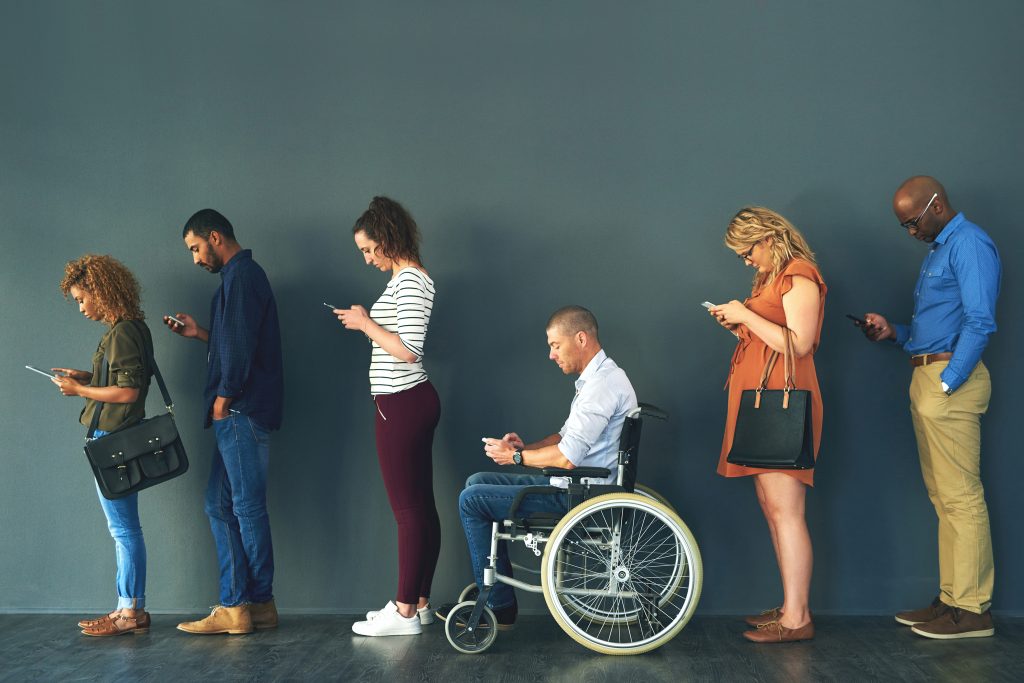
In general as a wheelchair user, I experience a lot of benevolence, respect and good intentions, which is wonderful. There are also situations, however, in which this goes too far. Sometimes, people with disabilities are treated with excessive caution. When this does occur, it can seem inappropriate to express criticism or admonish others. It feels like we are often cut more slack and allowed to take more liberties, and that others are more likely to turn a blind eye to bad behaviour. I remember a great scene in the film “Vielen Dank für Nichts” (English title: “Keep Rollin’”) in which a group of friends who are in wheelchairs amuse themselves by deliberately colliding with pedestrians. Rather than expressing their displeasure, the pedestrians actually apologise! We can definitely give people with disabilities more credit and expect more from them – both in a positive and a negative sense. We must accept that they too make mistakes and act badly sometimes, just like every other human being who does not possess only positive qualities.
Jokes and humour
The question of whether or not it is acceptable to make jokes about people with disabilities is a controversial one. While opinions among the non-disabled vary, many people with disabilities are in agreement: yes, it’s OK. In fact, it would actually be discriminatory to exclude someone from normal communications, which include jokes, on the basis of certain qualities or features they possess. As always, it’s a question of context and intention. Most people with disabilities don’t want to be treated with kid gloves and are open to humorous interactions as long as they aren’t derogatory or offensive. Films that unmask stereotypes in a humorous way can be wonderful examples of this. There are also some stand-up/sit-down comedians (i.e. in wheelchairs) who use their sharp wit to tackle the topic of inclusion. Humour can be a way of breaking down barriers and creating an inclusive atmosphere.
Overall, it is important that people with disabilities are treated as equal members of society and are able to both exercise their rights and fulfil their obligations whenever possible. By treating one another with respect and communicating openly, we can break down barriers and promote an inclusive society.