

The power of language
Thoughts and words influence our emotions and our actions. This is especially apparent in sport. Words can either empower and motivate or unsettle and weaken us. This is something I have realised not only through my sporting career but also during my training in the field of hypnosis, when I was able to experience the immense effect of words, both in a positive and a negative sense, on our consciousness and subconsciousness.
“Watch your thoughts, they become words. Watch your Words, they become actions. Watch your actions, they become habits. Watch your habits, they become character. Watch your character, for it becomes your destiny.” Talmud
Language or “wording” has a big influence on how we perceive the world. The same is true when it comes to inclusion issues. I personally am relaxed and tolerant when people use non-inclusive language. I know that they often don’t mean any harm or say these things on purpose. It is nevertheless worthwhile for us all to be aware of the power of language.
Here is an example of a description that might appear in an article about a wheelchair user:
“She has been wheelchair-bound since suffering an accident at the age of 17. Despite her status as an invalid and her special needs, she has coped with her fate admirably and is now living life to the full.”
Just as many people do not necessarily suffer from anything, wheelchair users are not bound to their wheelchairs. These are expressions that I often encounter in the media to this day. They make me think of a person who has been shackled to their wheelchair like a prisoner with handcuffs and leg irons or even a piece of rope. It does indeed happen that people with high degrees of paraplegia are strapped into their wheelchair for stability. Ultimately, however, what the wheelchair means for many is freedom.
The German term “Invalidität” (= disability) comes from the Latin adjective “invalidus”, meaning, among other things, worthless, incapable and feeble. In the Middle Ages, the word was used to refer the wounded, while in the 18th century it came to denote soldiers who were unfit for service or had been decommissioned. The term “Invalidität” came into common usage in German in the 19th century. “Invalidenversicherung”, “Invalidenrente” and “Invaliditätsgrad” (= disability insurance, disability pension and degree of disability) are terms that are still common here in Switzerland, especially in federal government documents. Even though it is not employed with the intent to discriminate, the time has nevertheless come to replace the old word “Invalidität” with a new one that has fewer negative connotations. After all, similarly outdated terms like “cripple”, “imbecile” and “idiot” have long since been erased from the official vocabulary.
Using the word “despite/in spite of” in the context of disability gives the whole thing an unnecessary air of severity and tragedy. It could be replaced by “with”. Furthermore, the attitude towards people with disabilities – both in society and in the media – often focuses on deficits. It is all about the things a person cannot do or which do not correspond to the norm. The use of phrases like “against all the odds” is further evidence of this. It is essential to shift the attention onto the person’s strengths and the things they can do. The focus should be on the human being as a whole and not on their deficits.
In some places, terms like “people with special abilities or special needs” have become established as alternative ways to refer to people with disabilities. These are well-meaning attempts to make language less discriminatory. The catch, however, is that they simply aren’t accurate. The abilities and needs of disabled people aren’t “special” and they are just as diverse as those of non-disabled people.
On the subject of the “non-disabled”: I often come across the word “normal” being used instead of “non-disabled” – such as when I as a wheelchair athlete am compared with “normal”, i.e. non-disabled, athletes. In conversation, this usually happens unintentionally and is immediately followed by an embarrassed smile or put into perspective with “air quotes”. My impaired mobility of course means that I am not part of the norm. The majority of the population is better at walking than I am. In the same way, the group of people who can see or hear well is “the norm” because it is bigger than the group who cannot. Fixed ideas of normality are nevertheless questionable. Where does “normal” begin and end? Are there not grey areas? Can anyone be completely normal in all respects or do we not all deviate from the norm in some way? In any case, the categories of “normal” and “abnormal” do not seem particularly well suited for describing people with or without disabilities. Classification as “healthy” and “ill/sick” is just as unsuitable. Curable illnesses are usually temporary whereas disabilities are generally lasting and cannot be cured. On the other hand, they do not have to cause constant suffering either. It therefore follows that the opposite of “disabled” is not “normal” or “healthy” but just “non-disabled”. Of course I too get ill with colds and the like from time to time.
I have also noticed an automatic change in the language I use on a personal level. For instance, I hardly ever say “I am disabled” any more. I usually say, “I have a disability”. This wasn’t a conscious decision, it just felt “right” for me. Now that I have spent more time thinking about and studying the topic, my feeling has been confirmed by further examples such as “stupid” or “criminal”. If you use a certain word to describe yourself you will be treated accordingly, and if you believe yourself to be a certain thing, sooner or later you will become it. To illustrate what I mean, I’d like to tell you the story about the children in the supermarket, the source of which I unfortunately no longer recall. A child drops a bottle of milk on the floor at a supermarket checkout, causing it to leak everywhere. “You stupid child!” the mother yells. At another checkout, a child drops a jar of honey, which also makes a big mess on the floor. “Well, that was a stupid thing you did,” says the child’s mother. The first child has been told that they are stupid, the second that they have made a stupid mistake. If we apply this analogy to the world of sport, we can say that an inadequate performance does not make an athlete a worse person, merely that the performance was inadequate in this particular instance. Vice versa, a winner of a particular competition isn’t automatically a better person.
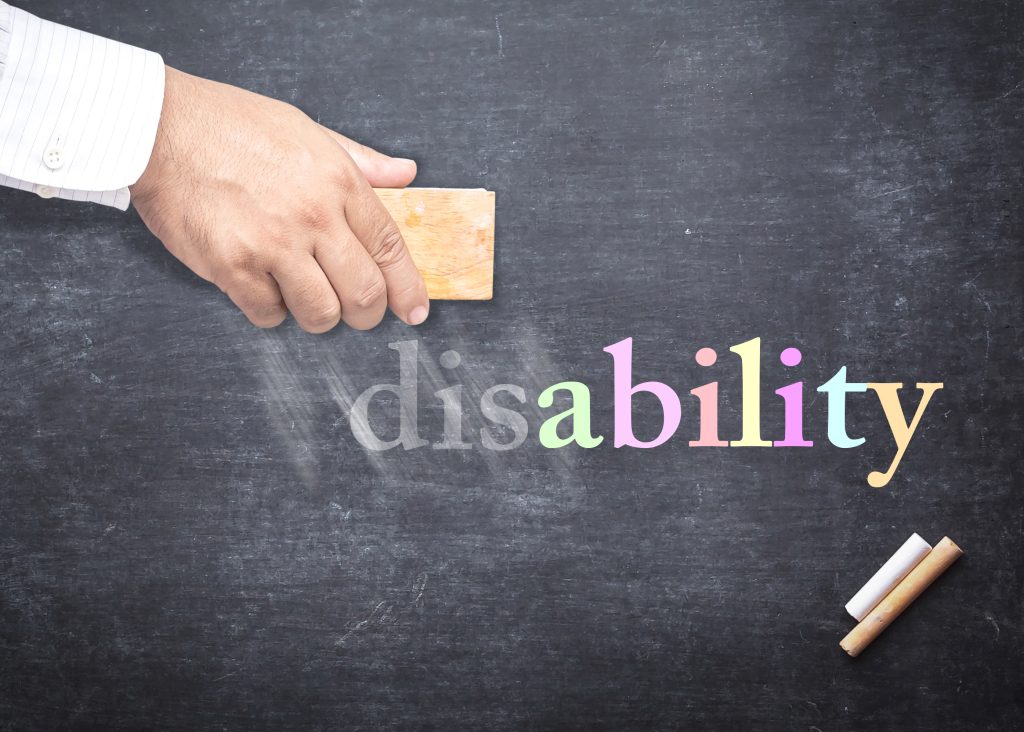
It is a challenge to find words no one at all will find offensive or inappropriate. Ultimately, the goal is to be aware of the power of language and promote mutual understanding, openness and tolerance. If you are unsure, it is always advisable to ask the person in question what they would like to be called or which terms they prefer. This is the only way we can develop a language that does not hurt or discriminate anyone and adequately reflects the diversity of our society.
One of my sources of inspiration for this blog article was Leidmedien.de